 By
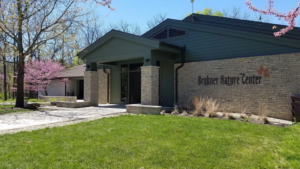
By Seven miles west of downtown Troy, Ohio, sits a nature center that offers valuable resources to its patrons. Brukner Nature Center, just off of Horseshoe Bend Road, opens its to over 130,000 visitors annually. Year-round, guests can come experience, appreciate, and learn about wildlife conservation in Ohio through site visits, educational programs, and hands-on activities.
The center was established in 1974 by Clayton J. Brukner, a philanthropist and pioneer of aviation. Brukner was a founder of the WACO Aircraft Company, which was at one time the largest producer of commercial aircraft in the world.
A nature lover himself, Brukner unveiled plans in 1967 to use 146 acres of land he owned along the Stillwater River to build a nature center. He saw those dreams come to fruition in May of 1974 when Brukner Nature Center opened to the public.
Now encompassing over 165 acres of land, the facility also offers visitors over six miles of walking trails and the 1804 Iddings Log House, alongside its Interpretive Center and Rehabilitation Unit.
B.N.C. offers visitors the chance to see up close and personal native wildlife, represented as a wide variety of over 50 different native species of mammals, amphibians, birds, and reptiles. Many of the center’s “wildlife ambassadors” arrived as injured or orphaned wildlife, and were deemed unfit to return to the wild. Those ambassadors now help to educate the public on the importance of wildlife conservation.
Deb Oexmann, the Executive Director of Brukner Nature Center, said the center offers a wide variety of educational experiences, with many focusing on children. “One of our most popular programs is called P.E.E.P., our Preschool Environmental Education Program,” Oexmann said. “It’s been going on for over 30 years, and it’s a way for us to introduce a love of wildlife and the outdoors to kids as young as three years old.”
Other programs include bird watching clubs, classes for homeschooled students, and guest speakers that touch on a swath of topics for interested attendees.
Top Tier Care
Brukner Nature Center serves as a rehabilitation center for wildlife as well as an education center. On the grounds of the facility lies their rehab unit, used to nurse injured and orphaned patients back to health.
Brian Ayres, Director of Operations at B.N.C., said that they provide any animal brought to their center the best care they can provide. “We always want to do what’s best for the animal,” said Ayres. “Anytime the animal is displaying natural behaviors that make us feel like they can be successful in the wild, we want to get them back out there.”
Each patient that’s brought in is given a thorough medical examination to determine the severity of an injury, and Ayres’ team will determine the best course of action. In situations where an animal requires more intensive care, they’re brought to Troy Animal Hospital, who partners closely with B.N.C.
The most common animals brought in are rabbits, squirrels, and smaller birds, such as American robins or common grackles, but Ayres has said the center will always treat every animal that comes in as a priority.
While the goal for every patient is a re-release into the wild, that isn’t always the case. Oftentimes, injuries that hinder sight are what prevents an animal from returning to the wild. When an animal can’t go back to the wild, it becomes a wildlife ambassador at B.N.C., living a comfortable life while they help to educate the next generation on the importance of conservation.
A Lasting Connection
Because Brukner Nature Center is a privately funded entity, they receive most of their monetary support from grant funding, donations, and memberships.
Ohio Animal Foundation (OAF) partners closely with Brukner Nature Center. In fact, B.N.C.’s Spring 2018 grant application was the first that OAF ever received! Since then, OAF has issued over $2,000 in grant funding to the center to be used for rehabilitation enclosures, educational materials, and food, among other needs.
Ayres said money from grant funding has also been used to purchase cameras for the enclosures of some of their ambassadors, leading to better insight on animal behavior. “We use the cameras to watch the animals at night, so that helps us to see how they’re behaving more naturally,” Ayres said. “When we’re out there with them, they’re naturally a little nervous. These help us with learning when they may actually be ready to go back to the wild.”
OAF and B.N.C. have been working together since 2018. Since then, both organizations have developed a strong relationship, built on trust, support, and a mutual passion for one thing: wildlife conservation. “It’s amazing, with a privately funded organization like ours, how we make every dollar stretch,” Oexmann said. “You all [OAF] have supported so many projects to help our wildlife ambassadors and rehab patients have a better life, so we appreciate that.”
Showing Your Support
If you wish to get involved with B.N.C., there are a myriad of ways to do so! Their website hosts a calendar of events, as well as information about membership and outreach programs. They also have a donation wish list for those wanting to provide material support.
For those wanting to make a career in wildlife conservation and education, Brukner Nature Center also offers internships, externships, and volunteer opportunities! Visit their website for more details. Should you encounter injured or orphaned wildlife, B.N.C. encourages you to call their center at 937-698-6493 before bringing in any animals.
In an age where conservation efforts are of extreme importance, Brukner Nature Center offers a unique fusion of hands-on learning and education, all while providing over 150 pristine acres of land for your enjoyment.