
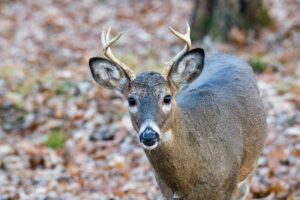
 If you’ve ever spent time outdoors in Ohio, chances are you’ve run across a white-tailed deer. They’re an iconic part of Ohio wildlife, so much so that they were made the official state mammal of Ohio in 1988. White-tailed deer can be found in each of Ohio’s 88 counties, anywhere from backyards to state parks and nature preserves. This time of year, deer are much more active than usual. The increased activity makes it important to be aware of what you should do, should they cross your path.
Deer mating season, sometimes known as “the rut,” occurs during mid to late fall, peaking in November. During this time, male deer usually exhibit more aggressive behaviors and are likely to act less cautious and flightier than you might normally see. Here are some safety tips to keep in mind.
Be extra cautious on roadways.
As a result of heightened activity, deer can be more likely to cause accidents on Ohio roads. According to the Ohio State Highway Patrol (OHSP), deer were involved in over 109,000 accidents from 2019 to 2024. Additionally, the OHSP said that between 2019 and 2023, a staggering 47% of crashes with deer involved occurred between October and December, with nearly 22% in November alone. Stark, Richland, Hancock,and Defiance counties had the highest number of deer-related incidents during that time frame, respectively.
It’s important to apply an extra layer of caution during the rut, particularly on roads in wooded areas or areas with large fields. If it’s dark, use high-beam headlights, and always keep other motorists in mind. When a collision with a deer cannot be avoided, brake and try not to swerve out of your lane. Don’t put other motorists at risk!
Recognizing deer behavior.
During the rut, male deer exhibit an increase in aggressive behavior, due in large part to an increase in testosterone and other hormones. Deer are often seen in suburban and residential areas, so recognizing signs of aggression can help keep you and your pet safe.
Lindsey Krusling, a wildlife communications specialist with the Ohio Department of Natural Resources (ODNR), says commons signs of aggression in deer can include the following:
- Stamping of feet.
- Snorting
- Intense staring.
- Stiff posture with head and ears tucked in.
If you encounter a deer that is displaying any of these behavioral signs, backing away slowly and giving them space is usually all that is needed.
“We always say to just give them distance if you can,” Krusling said. “In tight instances, making yourself appear larger and shouting can also be effective.”
Other behaviors, according to Krusling, can include leaving rubs (abrasions from antlers against tree bark) on trees, and sparring other stags more often.
The ODNR also highly recommends keeping dogs and other pets leashed on walks, particularly during this time of year.
Passive ways to avoid deer.
If all you’re looking for is a way to keep deer out of a home garden or landscaping, we have you covered there, too! Fencing and other physical barriers are oftentimes the most effective deterrents for keeping deer out of yards. In gardens, odorous plants, such as peppers or garlic can also ward them off.
Our home is their home, too.
All in all, the most important thing to remember is deer call Ohio home, just as we do. It’s natural for this behavior to occur during the fall, and all it takes on our end for them to thrive is space, distance, and a little bit of understanding. All our local plants and animals deserve a space to thrive in. By doing our part, we can give them exactly that!